
So, after much, much speculation and many, many rumours, Microsoft finally took the wraps off Windows Phone 7 Series, its newest mobile operating system. Hold on to your hats, because uncharacteristically for the Redmond giant, they’ve rebuilt everything from the ground up – this system has little to no connection to the Windows Mobile of yore. I don’t say this lightly – but dear lord, Windows Phone 7 Series is full of win. Update: Hands-on video from Engadget inside. Update II: There is no sync application. It’s all done over-the-air, to the internet. Only videos and music are synced via the Zune software. Update III: Since I didn’t mention it clearly, here it goes: Windows Phone 7 Series is a clean break. There is no backwards compatibility at all. Update IV: Channel9 has a 22-minute in-depth demonstration of Windows Phone 7 Series.
Gone is the old Windows Mobile name, replaced by the rather long Windows Phone 7 Series. Everything has been rebuilt from the ground-up, resulting in what could be described as the Zune Phone, something many people have been clamouring for ever since the very positive reaction to the Zune HD.

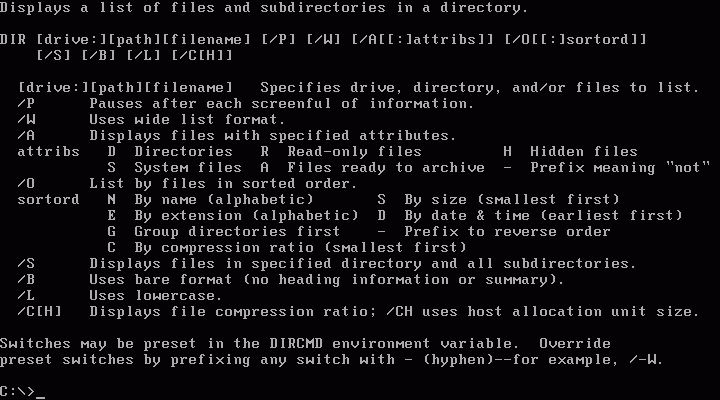
As Engadget, who has played with it already, states, this is a new operating system. This isn’t a new version of Windows Mobile – it’s new like the webOS was new, new like the iPhone was new. It boasts some pretty radical ideas about how a smartphone user interface is supposed to work – no chrome, no overdone 3D icons, no shadows. It’s extremely minimalistic, with plain and big white text and simple white icons. The simple white-on-black reminded me of something, but I couldn’t quite put my finger on it until Engadget pointed it out: an MS-DOS terminal.
There’s no more start screen. It has been replaced by a home screen with customisable tiles, which can contain widgets, application launchers, information displays, whatever. To the right of the start screen is a vertical list of applications. The interface feels and looks a lot like Zune HD’s, complete with smooth transitions.
One of the core interface components of WP7S is what I’ve dubbed the “wall”. On-stage, Microsoft’s Joe Belfiore showed off what the company calls “Hubs”; there’s a People hub, Gaming, Office, whatever. The People hub, for instance, has three panes: recent contacts, your own info, and one with latest social networking updates. Moving back and forth between them is like shifting your eyes from one section of a wall to another. The shots below really illustrate the concept:


Another concept I really liked is the command bar. It’s a bar sitting at the bottom of the display of some applications, showing most-used commands. You can drag this command bar upwards to reveal more actions if the need arises. The built-in applications, like Outlook and the Calendar, are also very minimalistic in design, looking almost like vector line art. The browser, based on the desktop variant of Internet Explorer (supporting all the fancy multitouch stuff) barely has any chrome at all.
Most of the rumours were true. Every WP7S phone is a Zune, there’s Xbox Live integration, and yes, Microsoft is going to be pretty strict about how the devices may look. Screen resolution, aspect ratio, CPU speed, memory, you name it; it’s all mandated by Microsoft. Even the button configuration: Start, back, search. That’s it. No deviations. Speaking of deviations – no more custom UIs, Microsoft doesn’t allow them.
Microsoft already has an impressive list of carrier and device partners (shocking, isn’t it), including AT&T, Deutsche Telekom, Orange, SFR, Sprint, Telecom Italia, Telefónica, Telstra, T-Mobile USA, Verizon Wireless, Vodafone, Dell, Garmin-Asus, HTC, HP, LG, Samsung, Sony Ericsson, Toshiba, and Qualcomm.
As the rumours suggested, this press conference was mostly UI-focussed, so not a whole lot has been said on the internals, SDKs, multitasking, application distribution, and so on. Steve Ballmer said more is to come on this subject at MIX. The first devices are supposed to ship by the holiday season of 2010.
We’ll update this story as soon as the big boys (Engadget, Gizmodo, etc.) have more hands-on information to share with us. So far, this looks like a tremendous leap forward for Microsoft’s mobile effort, and they’ve truly come up with something unique, something not copied from the iPhone, Android, or webOS. I’m actually excited!

A good UI—great, awesome, thanks! But the iPhone is tough competition:
* Will it sync with Mac?
* Multi-touch?
* Marketplace? What will the deal be with this?
* GPS/Compass/Camera/Gaming cred
Microsoft will have a tough sell now that the iPhone is established, but this certainly is the UI for it. I’m very glad they’ve done their own thing their own way.
My first respons, who the f–k cares you are talking 5% of users. Most likely it won’t sync but it will sync with cloud and probaply work as usb memory(since they support SD cards).
Yes, shows in proto unit. Is part of Chassis 1 spec.
It will be there but it will be reboot, which is good since now Marketplace is half-assed. No old programs will work with new UI.
It will be intresting how this UI work. It reminds bit WebOS. For developers there is couple new things like “tiles” and how you use those to present information. Also it’s unclear how third party apps work but I would guess thru “hubs” as external parts. And thank god they finally thrown away stupid multichassis style, now only Nokia seems to wander that way which is valley of death.
Actually, we’re talking about _millions_ of people. And millions more per quarter.
Looking at the Mac userbase as a percentage is monumentally narrowminded. It’s a huge group of affluent people, Microsoft would be making a mistake if they don’t at least _eventually_ support Mac, even if it’s just an iSync plugin.
It’s still only five percent of computer users worldwide. We reside on the web too much, so we get the idea the Mac is everywhere. Truth of the matter is, however, that out in the real world, Macs are rare, and while I would certainly like to see Mac support, I find it totally understandable if Microsoft won’t bother spending money on only five percent of computer users.
It simply makes no sense.
No Thom, Kroc is right. Of the 95% who don’t use Mac, some of them use Linux, and MOST of them use flip phones. Of those who don’t, many of them use iPhones and many of them have no interest in a smart phone. Then another percentage can’t afford a phone like this.
Because these people have money, like gadgets, are comfortable switching technologies and UI paradigms, and are probably the best example, on the whole, of people who would want a tiled, customizable, social-network-infused phone. So it’s not 5% of the the market, I’d bet it’s probably more like 15-20% of the *target* market.
That’s actually a really good point. Don’t know if we can prove any of it, but it makes sense. Hadn’t thought of that.
So it might be worth their while after all. I’m sure they’re doing their homework on that one.
MS write Office for the Mac, why would they bother to write an entire Office suite (it’s not a straight port) for a small market?
I think this phone will be supported on the Mac.
That’s not really a very good comparison.
Office for Mac started before Office was Office, i.e. 1984 with word and later on powerpoint. Apple was the king and Microsoft had no choice but to support them. It also had virtually had no viable competition and as of today remains the dominant office suite on Mac. Although iWorks is making some inroads, Microsoft will continue to have a very large chunk of the Mac office productivity market for the foreseeable future.
Windows Phone on the other hand is new so it makes a lot of sense to initially avoid a relatively tiny Mac/Linux market sector which is also mostly hostile towards Microsoft.
If Windows Phone becomes popular and proves successful and Microsoft captures as much of the 90% of the Windows market as it could, then it would make business sense to go after the remaining 10%, i.e. the niche. Before that time comes, the overhead cost is not worth it.
Further, Microsoft probably wants to keep office suites purely an MS only choice. As shown by a recent article, it is their bread and butter. They don’t want something to pull a Firefox in the land of office suites.
Have you ever actually used Mac software from Microsoft?
I’ve used Office:mac X, 2004, and 2008.
Not only are its apps buggy and super slow, the development is slow as well. For the longest time Office:mac wasn’t even capable to read Unicode! Office:mac itself also wasn’t able to read and write OOXML files (NeoOffice was).
After all those years Microsoft Messenger is still not capable of AV chat!
Just like Zune? Oh, wait… Zune isn’t supported.
Makes perfect sense. A person who uses a $300 computer, isn’t going to spend $500 on a phone.
No OSX User will buy a device that has to work with their Macs and is made by MS. They might buy a Xbox, but on the Mac they are conditioned to avoid MS whereever they can (ActiveX, Zune, WinMo the list goes on and on)
I know no OSX user who would buy a Windows phone, no matter how advanced the UI might be.
But then again I know no OSX users that owns a Xbox, those might.
I am an OS X user, and I’d buy whatever phone works best for me.
They are conditioned to avoid MS? What a load of garbage that is!
I too am an OS X user and I do have an older Win CE device that I love. I also use XP and Vista and do have an Xbox360. So you don’t speak for most Mac users in my field. I Like the Mac and no one conditions me to hate anything. I like what works for me and most Mac users that I have to work with feel the same and many of them have MS products.
But, but, reading OSNews comments I always got the impression that you were good when using Linux or OSX, and bad when using Windows? And that somehow using one should trigger spontaneous spitting on the other? Was I mistaken?
Is it possible to be open minded, like the experience they each have to offer and use them for whatever task they’re good at? God, my whole foundation of beliefs, crumbling…
Are they? I commute in to London every day by train (~1 hour) and see loads of Thinkpads (work issued), a lot of Sony, loads of Netbooks (usually being used to watch movies), and at least 3 or 4 Mac’s a week. Not the same people either. Some are as old at Ti/Alu Powerbooks, some are Macbook Pro’s, but a lot are white plastic Macbooks. I would say, ~60% of the machines I see are Windows fullsized laptops, ~30% are small laptops or netbooks, the of the rest, at least ~10% are Apple and the odd Linux (pretty rare.)
Compare this with 2 years ago when I started commuting… there were no Macs what so ever.
Keyword: London.
It’s like saying “Tigers are the most common mammals of the planet” while standing in the tiger cage at the zoo.
Worldwide, Mac share is round and about 5%. That’s peanuts, unit-wise (but not peanuts profit-wise, as Adam pointed out).
Edited 2010-02-15 17:03 UTC
It’s the same thing if you put it the other way around. In countries and places where people can afford a phone like this, Macs are not that rare. I doubt there are a lot of iPhones in Congo either… but that’s not where these devices are targeted.
USA and Western Europe have a bigger Apple market than, say, Africa, or maybe South America (very expensive down there).
I think that the comparison with Office is valid, why waste time in Office for Mac if it’s so unimportant? Clearly supporting office is way more complicated than an iSync plug in. If it’s not supported, that’s on purpose and not for lack of resources.
Because Office for the Mac is a lightening rod for antitrust claims. Office:Mac has been around for longer than Office:Win, and Microsoft discontinuing it (which would make a lot of sense) would clearly be used as an antitrust attack.
Office:Mac doesn’t primarily exist because it makes an awful lot of money – especially not with Apple jumping platforms/operating systems all the time. I’m convinced Office:Mac is barely making any profit – heck, it probably barely breaks even.
Although you have a valid point, I still think that not supporting Sync with macs will omit a large portion of potential buyers.
I would add that MS probably wants to keep its market dominance in the office world. As shown last week, Office is MS’s biggest money maker. I wouldn’t doubt that MS is willing to spend that little bit extra to keep its bread and butter alive. MS does not want to leave room for something to pull a Firefox in the office suite world.
Given your article saying Office is one of MS’s top money makers, I would be that MS keeps the Mac version alive to keep a good competitor from popping up and doing a Firefox. Again.
I will probably be modded down for this, but a lot of the Mac users are die hard Apple fans that would never buy a phone made by Microsoft. Yes not everyone is like that but many of the Mac users I have spoken to get their kicks from mocking everything Microsoft. I don’t think they will be purchasing a Windows phone even if it turns out to be better than iPhone.
Was waiting for someone to point that out. A Mac user with a Windows phone is kind of like a Buddhist carrying rosary beads!
Also, I’m not too sure about the target market argument when it comes to Mac users. I mean he’s right when he says that Mac users are prime examples of the target market in respect to age, wealth, inclination etc., but the Web2 teenies out there will eat this up, and they’re spending Mum’s cash, not theirs.
Oh, and I’ll probably buy one as well 😉
That is possible. My wife has a macbook and her iPhone… but they do sync up nicely and play nicely together. That is one reason to own all Apple products; they recognize each other.
I have friends who have all Apple products. We have a mix because I appreciate a variety of hardware and software (Operating Systems), but then again we have also ALWAYS had at least one or two Macs lying around the house. But please don’t make owner loyalty a crime.
This looks like a pretty cool phone. It will be interesting to see more video, some more of its capabilities as time progresses.
Macs may be rare where you are but they are certainly everywhere that I am. I see people with them every single day. I don’t have to look they are in the coffee shops, they are in the hotels I go to, they are in many of the homes I have to visit. So while it may be 5%, as was stated that is millions of macs and more every day. I agree it would be stupid if MS deliberately did not support macs. After all they do make office for Mac and that really has to be a fraction of the windows version.
I am also seeing small businesses in my area replacing there PC’s with Macs. I see it all the time in my field of work. I rarely if ever see them go from Windows/Mac to Linux, it just does not happen here.
its ironic though, that year on year the mac marked share is actually down compared to the growth of the pc marked.
not shrinking, obviously, just not growing as fast.
/stone
I wouldn’t go that far. I would just say that it is the percentage of potential customers that matter, not the world.
A million Chinese that don’t buy software aren’t worth more than a single Mac user.
Mac users are ~12% of the largest software market which is nothing to scoff at.
it’s still a group of people microsoft doesn’t have to care about. they use ms office and heaps are running windows on their macs anyway so why should they bother?
mac users are on par with linux users as far as win mobible 7 so don’t flatter yourselves.
Actually, we’re talking about _millions_ of people. And millions more per quarter.
Looking at the Mac userbase as a percentage is monumentally narrowminded. It’s a huge group of affluent people, Microsoft would be making a mistake if they don’t at least _eventually_ support Mac, even if it’s just an iSync plugin.
millions of people who are probably going to buy the iphone anyways.
Saying that Mac’s only have 5% of the market, whilst true, is the reason we had problems with Microsoft and interoperability. 5% of the IT world is still as said before, millions and millions of machines, shutting these out is going back down a dark path that Microsoft at the end of the ninties was enjoying. Phones should be open, the internet is open so all attached computers should be aswell.
How many mac users, use activesync (i.e. connect to corp exchange servers) to read emails and manage their calendars, only a small percent of that 5% marketshare, however it’s still as important as any other feature to make platforms more connected in todays world, which connectivity is everything.
As for the phone itself, i think if Microsoft can release into the public, the same fluid innovative UI shown in the preview then Microsoft is a serious competitor. I like the idea of hubs / zones of information, the interaction looked humanised and not so based around computer desktop designs. To me it had elements of flicking through a book, which i find a very good ui.
If my introducing this new UI and Mobile Phone OS, Microsoft has to kill some other features such as multitasking, then i say it’s a small price to pay for the average user. I admit some power users will need to multitask, however the UI here for the average user negates the need for multitasking.
I have to see it in action to form a opinion, but I guess this is yet another platform and because it isn’t really suitable for the enterprise (will MS keep supporting WinMo6?) and I really don’t have high hopes how extensible the platform will be.
I just need more cold hard facts and some hands on experience, but my initial feeling is that this might compete with the Iphone.
Edited 2010-02-15 16:15 UTC
Microsoft stated in the run-up to 7Series that they would have both platforms available in parallel. Which is most likely code for “lets not piss off our old partners and users too much, but this new thing is what we care about”.
I’m wondering if MS are shooting themselves in the foot by having such a strict control over hardware when Android is fast gaining popularity.
After all, one of Windows Mobile’s selling features was customization and platform range.
I appreciate that Apple have had a great deal of success over their closed design, but not every handset has to be an “iPhone killer” to compete with the iPhone.
And quite frankly, Microsoft stand a better chance against Google’s Android (as much as I personally love the platform) than they do against Apple’s iPhone.
So with this in mind, I’d be very interested to see how hardware designers court with Windows Phone and if Android picks up any market share from manufacturers wanting to release custom alternatives.
Android is nice and all, but I simply don’t understand Google’s strategy. Every phone has to be updated by manufacturers, there are lots of different UIs already, different versions all existing side-by-side, which makes it very hard for developers to target the best of the best.
Blimey, that sounds a whole lot like Windows Mobile up until today!
I’ll have to wait for the nitty gritty about WP7S (SDK, multitasking, etc.), but so far, it’s looking pretty damn good. Tighter control is the way to go hardware-wise, because it ensures a single, non-moving target for developers.
Yeah, we know, it’s not Apple stuff so it rocks.
blablabla …
I own an iPhone and love it, you troll. Go be an Apple troll at MDN or something.
True.
But actually, real problem with Windows Mobile pre-7 was the hell about resolution. Basically Microsoft was doing too much, by supporting too many resolutions to allow phone makers to do what they wanted regarding size, buttons placements and so on. It was great for makers which could use the same codebase for many different phones but no good for developers which had to support too many resolutions and also cope with landscape/portrait differences.
I’m waiting to know more about internal details too. Rumors weren’t that pleasing.
Not true, if you read blogs from Android devs than it is clear that the wide variety of devices, screen sizes and OS versions is not that big a deal. Sure it hinders mobilbe gaming. But for other apps it really does not matter that much.
Android has really good foundations and enough abstraction to deal with all this stuff. It may be a little more work to write a good Android app, but nobody needs the 150k fart and flashlight apps in the Appstore anyways. I for one need more FOSS apps. Those will get adapted to all devices quicker than anything.
That said, vendors like Samsung that just ship the Galaxy with Android 1.5 and never update have to die. Google should make sure somehow that users get at least a few minor updates.
I don’t think this is more targeted towards Android than the Iphone.
Android is less than free, you can get money from Google if you put Android on your handset. MS will want to see money for WP7, so the devices will be expensive and probably fall in the Iphone price range.
Android devices will be way cheaper or have way better hardware specs.
And make no mistake, Android will evolve. Android is modular. Putting a new OpenGL-UI ontop of Android would be possible for this holiday season.
And don’t forget all the free stuff you get with your Android phone (Goggles, Turn-by-turn navi, Google Voice etc)
Android is more than capable to deal with new competitors (be it Bada or WP7)
Edited 2010-02-15 16:30 UTC
That was my point.
I think Microsoft would be smarter refining their platform than shift their focus.
That’s interesting to know.
Wasn’t aware of Google’s pricing strategy.
I’m well aware of all this.
I’m by no means stating that WM7 is better than Android or that Google couldn’t compete in this market.
I just think Android is an easier target than the iPhone and, though the iPhone has a bigger market share, Android has more room for growth due to it’s open nature.
So, to me, it seems more logical to attack the biggest potential market rather than the one that seems the most popular now but also the most competitive.
However, it’s not my decision and, for all I currently know, MS might be making the right decision.
Either way, I’ll be keeping a close eye on the market to see how things pan out.
Android doesn’t have a good multimedia library. The game selection is rather lacking as well. I’d be willing to pay quite a bit extra for a mobile 7 phone just to have access to xbox live. Android is good for people who just want a phone and mini-browser but it can’t compete when it comes to the itunes store.
I sware by android and I use it for far more than just a phone and mini-browser.
Aside the various social networking apps, I e-mail, FTP and SSH on it. I run various augmented reality tools (android is actually the front runner for AR on smart phones) and play console games (NES, SNES, Master System / Gamegear, Genesis, Gameboy (Classic, Colour and Advanced) and MAME.
In fact, the only thing I don’t do is ring and text :p
Just because you play pirated games on your android doesn’t change the fact that for most people the iphone has much more to offer.
Android doesn’t have an answer to the itunes store which limits its appeal. Having SSH and FTP are a part of that limited appeal.
I really didn’t want to get into a platform war, but I feel I should debunk some myths you’ve raised:
I have the original carts.
However a games console + TV isn’t a portable as a smart-phone
I’m yet to see something the iPhone can do that other smart phones cannot.
If anything, the iPhone has always played catch up with Android:
* MMS
* copy/paste
* sat nav
* augmented reality
* alternative browsers
* desktop widgets
* multi-tasking of 3rd party apps
Granted the 1st 3 were [/i]finally[/i] been officially implemented in OS v3, but not before Android had been on the market 12 months.
Android still leads the market on AR and has (arguably) the most sophisticated multi-tasking.
WM still leads the market on quantity of applications (unless you want to count the millions of dumb social networking front-ends on the iPhone?)
So how do Apple respond?
With an ever more erratic control over their app store, that’s how.
I’ve lost count of the number of official complaints lodged against Apple by their own developer community – but who cares about keeping the developers happy when you’re Apple and people blindly flock to your products like moths to a light bulb….
What does iTunes have that Android doesn’t?
* Google have an app store
* Android can play MP3s so you can just download from Amazon (for example) or stream from Spotify.
* If you really must have iTunes, then you can sync Android up and swap music and videos that way (personally I can’t see how iTunes is any more user friendly than dragging and dropping in your file manager of choice – but both options are there for Android users anyway)
And if it was the app store specifically you were referring to, then Google’s app store offers everything Apples does and more (due to Apples excessively strict grip on it’s community – which I’ve already brushed on).
Edited 2010-02-16 01:06 UTC
That doesn’t matter and I doubt you only downloaded the games you have carts for.
AN app store is not the same as the Apple apps store. The selection isn’t even close. Apple has much better support from mainstream developers. Games like DOOM and GTA Chinatown wars. Saying that Google has an app store is like saying your local mini-mart has milk and eggs so it is basically the same as wal-mart.
Movie and TV rentals is the other one. With itunes you can rent a movie for 30 days and you don’t have to stream it. It’s very convenient for travel, especially plane trips.
I doubt very much you know what you’re talking about.
As you’ll notice from that reply, it’s very easy to make assumptions based on very little information about a person.
So while you continue to make false assumptions about myself, I’ll continue to assume that you talk out of your anus
My reply: Google has Doom, but granted that it doesn’t have as many 3D games as the iPhone.
But I personally don’t see that as the be-all-end-all.
If I wanted to play console games, I’d buy a DS / PSP.
I had Tomb Raider on my Windows Mobile and rarely played it yet I play Sonic The Hedgehog all the time as I can just play 5 or 10 minutes at a time while waiting for the train.
I tend to see a similar trend I see a lot in Britain. Those with an iPhone tend to play the freebe / $2 games but those who want serious game play because they have more time on their hands (eg commuters); they will have a PSP or DS.
So I’m yet to be convinced that there’s as profitable market for large gaming software houses as Apple seem to be promoting.
Maybe in a few years – but at the moment smart phone battery life are still far from ideal and there market is too fragmented and the differences between platforms are too great.
However, going back to your point about choice of apps – I’ve already addressed this myth earlier and will repeat my point again later in this post.
Sorry mate, but that’s a fraking stupid statement to make.
Are you trying to say is Google’s app store isn’t an app store?
Are you trying to argue that a centralized repository of free and pay-for applications cannot be advertised as “app store”?
Or that, because it’s not made by Apple that it’s automatically inferior?
Furthermore, you’ve completely ignored my point about Apple’s strict control over it’s app store. So lets make some comparisons:
* Android has tethering apps – Apple does not.
* Android has alternative browsers with different rendering engines – Apple does not.
* Android had sat nav from day one – Apple did not.
* Android had no problems with Nine Inch Nails nor any of the other countless high profile cases where Apple inexplicably rejected their apps.
I’m guessing you ignored my point that you can use iTunes with Android?
Apple locks you into iTunes.
Google give you the option.
Surely choice is better none?
Edited 2010-02-16 19:48 UTC
No I’m saying that the selection is not even close to being comparable. It’s like comparing a mini-mart to wal-mart.
The vast majority of consumers don’t care and neither do I. Apple has strict control but better selection.
Oh so you can watch itunes movie rentals with an android device? Do explain how, without hacks.
http://androidforums.com/android-media/39053-help-me-dump-my-ipod-t…
Apple locks you into an awesome library that has games and applications that are iphone exclusives. You’re right that choice is better than none, and that’s why I prefer the iphone. Going with Google would give me less choice. I wouldn’t be able to choose from a massive library of games and movies. I wouldn’t have been able to play beneath a steel sky remastered. I wouldn’t have been able to rent movies to watch while traveling. Yes I’m aware that I can’t install outside apps. I have no problem forgoing this ability for the itunes library, especially since it is a device for entertainment.
And, as I always explained, that’s a dumb example.
But sure, your point sounds valid when you EDIT out other peoples replies debunking your comments like you had.
So I’m not going to bother reiterating my point as you’ll just ignore it for a 3rd time.
As I already explained, Apple does not have better selection.
I listen a number of examples but you EDITED them out.
I appreciate you’re in love with your iPhone, and I’m by no means saying that your Jesus-phone(TM) doesn’t have it’s place on the market – but there’s no need for you to exaggerate its significance nor deliberately misquote other people for the sake of pushing forward your own bias.
So please mate, leave the propaganda for Apple as us on here are smart enough to see through the BS.
Contradiction alert!
You state the iPhone is locked in then go on to say you prefer choice.
Well with Android you can use iTunes (nice job finding a link to a messageboard that proves nothing by the way ), Amazon and so on.
You have the choice to use the service you want rather than only using iTunes.
Personally I can’t stand iTunes (I could list numerous reasons, but at the end of the day, it’s just personal preference – much like why you like iTunes) so the fact I have the choice is fantastic for me (and everyone else who doesn’t like iTunes).
As stated above, that’s pure garbage.
It’s a mobile PHONE, not a DVD player, games console, etc.
However, as stated above, you can STILL do all of the above on Android.
Have a look at the top grossing games:
http://www.gamasutra.com/view/news/26871/TopGrossing_iPhone_Apps_GT…
EA, Activision and Rockstar all have top sellers. It isn’t just about $2 casual games anymore.
They’re new comers and it’s a new market.
Everything is new and novel.
I’d be more interested to see how these people compete two years down the line (much like how many standard iPhone developers are switching platforms now as there isn’t as much money to be made as there was two years ago).
So your comments equate to that of when Microsoft boasted about strong global sales of Vista during it’s debut and now it’s regarded as one of the worst received OSs:
http://www.microsoft.com/presspass/features/2007/mar07/03-26VistaDe…
Sure, I foresee iPhone games being more successful than Vista was (relatively speaking), however it’s also too early to boast.
“If I wanted to play console games, I’d buy a DS / PSP. ”
Kind of like if you wanted to SSH you’d do it from your laptop, instead of dicking around on a phone.
Just because you *can* do something with android doesn’t mean it’s worth it. Android is solving many problems that nobody has.
* Console games kill battery life – SSH doesn’t.
* PSP / DS is compact and can be carried in your pocket – a laptop cannot.
* PSP / DS have better controls for gaming than smart phones – SSH only needs a hardware keyboard which my G1 has.
* Console gaming is a luxury – I need SSH on my phone in case one of my servers develops a fault while I’m away from a computer. (though granted that last point is specific to my usage)
The exact same argument can be said for the iPhone, WebOS, Windows Phone and every other smart phone OS – so it’s a somewhat worthless point given the context of this tangent (comparisons between smart phones).
eg: I could say “just because people can play games on their phones, doesn’t mean it’s worth it, thus Apple are solving problems that nobody has”.
In fact, I could even use your argument against multi-touch, for all the sense your point makes.
Grandma and Grandpa usability…
My reply:
I don’t know about you, but i’ve never seen a grandparent with a smartphone of any description, let alone an iPhone. In fact, most people of that age group struggle with standard handsets that just dial and text as they’ve just not grown up with technology – so why would they want an iPhone?
But that aside, Drag and dropping in Windows Explorer is reusing existing IT skills.
Using iTunes is having to learn NEW IT skills.
Plus Android’s phone interface is just as intuitive as the iPhones.
So I don’t see how Android is any less user friendly than the iPhone.
Being tied to itunes is certainly one of the Iphone’s drawbacks. It’s an obnoxious piece of software, unless you use a Mac.
I think the tight control is a good move. In the past it was a pain to get updates, and now it should be easier with a central contact point. This should also help with time to market. The handset makers won’t have to tweak the OS as much, and they can concentrate on hardware innovations. Also, remember manufactures love installing crapware. Hopefully this policy will cut down on that.
I’ll support anything that makes phones closer to the PC model.
How can anybody be so positive about a phone that they haven´t even held in their hands?
What´s battery like?
How good is the on-screen keyboard?
What real apps are available for it? How well does it integrate with existing server applications for calendaring and email?
For my money, Android is the best phone I have ever had in terms of reliability, features, applications and the fast evolution of the platform.
Well, good for you!
Holy crap! I thought I was going to stick with my Treo 800w with WM6.1 for a few more years, but if Sprint comes out with a GOOD WP7 handset, I’ll be upgrading. I love the UI! It’s so simplistic and gorgeous. I love how high contrast it is, too!
Wow, props MS. I’m really surprised by this.
I had 100% opposite reaction. The old WM6 may be just that, but it is highly functional that most importantly does NOT rely on touch screens. This touch fad would work fine if we were not dealing with 3″ screens. Mind you I have actually small fingers, and even I find the touch on iPhones to be excruciatingly annoying. If a WMP7 phone from HTC did come with a stylus, sure then maybe it is worth considering if it offers something more. But it seems that Microsoft has said to hell with business users in favor of Joe consumer. Which is fine, and the smart thing to a degree. But I do not need Xbox live connection, Twitter, or any of that garbage on a phone. It seems they want to just “social” network these phones up the ying yang when I personally find “social” networking to be idiotic (sorry Ashton, I don’t give a f**k about your Twittering).
yeah, I tried multitouch phones and hated it, but they all had smaller UIs. The UI on this one had most of the widgets oversized and easy to hit.
We will see, tho. I tried out webos for a month before calling it quits and going back to my trusty 800w. I do like how I can do 99% of everything with just the dpad and keypad.
I found I could type in a web address about 50%+ faster using my stylus in WM6 over an iPhone. Of course I also have a HTC Tilt with a slide out keyboard…which is half way usable. Maybe HTC will come out with a new Tilt that will have a keypad slide out.
BTW, as for the “There is no sync application. It’s all done over-the-air, to the internet”. In other words you pay $50+ for internet access at home, and another $35 for just your phone. That $35 gives you 200mb, which is really not much when you think about it. So maybe on the safe side you want more, the 5GB plan which will now cost you $60. Any wonder why these cell phone carriers are so in love with smartphones? They also almost defeat the purpose of even having Wifi on the phone if your forced into a data plan.
Heh, US prices never cease to amaze me.
29.95 EUR per month. 200 SMS, 200 minutes, and unlimited data. And that’s the iPhone contract – there are cheaper contracts out there that offer the same for about 15-20 EUR a month.
I’m paying $90/m for unlimited texting, 5GB/m cap “unlimited” data, unlimited MMS, free nights and weekends starting at 7pm-9am, free cell to cell on any network, 3500 anytime minutes.
*edit*
That’s about 66EURO/m
oh, I’m also in the deep south (Alabama). :p And I have EVDO (3G) in my little city, too.
Edited 2010-02-15 18:00 UTC
I have 5k minutes in the network, 5k SMS, 5k yahoo/gtalk voip minutes and unlimited(after 8G speed drops to 256 kbps) internet(EVDO) for 20 €.
I live in Romania
wow, thats pretty nice!
Am I the only one who thinks multitask was nixed as well? I can’t really tell from the video but he kept exiting from applications with the start or back button to go into other applications. Very similar to what the iPhone does. This was rumored so I’m not surprised if they did do that. In-fact though the UI is radically different in presentation the concepts seem very much like an iPhone in functionality, again I’m only speculating from the video. Until I use one I kind of don’t know how I feel about the UI, I think I would hate scrolling to the side like that all the time to get to things.
Holy crap, in the Channel9 video, they show just how much thought has been put into this. The text/icons inside the circle buttons rotates along the rest of the UI as you switch from portrait to landscape.
The buttons stay where they are, but the text or icons inside them rotates. Very thoughtful.
EDIT: Oh and heck, it goes even further: you can choose white-on-black text, or black-on-white. Nice touch.
Edited 2010-02-15 18:31 UTC
Yes it is all quite nice and all, but if you think about it all the MS lock-in will severely limit this device.
Live? Bing? Zune? Those are all second rate solutions used by minorities.
I guess it will be hard to replace the IE suckfest and from the start there will be very few apps. (I just looked into the Windows Mobile Market and their offerings here in Germany are totally pathetic although the market has been out for months now. A few dozen apps and most of them really expensive. Totally bad free ones .. major suckage PERIOD I am not sure ZunePhone Market will be different.)
Sure, if you are one of those Facebook zombies and only play with kids on your Xbox it will be a really sweet phone, but a hit? Or something that will gain marketshare .. really not sure about that.
And the UI isn’t superfast (Bada seems a lot faster in a crashy kind of way and even new Android UIs are smoother http://androidcommunity.com/tat-home-new-android-3d-interface-comin… )
I think it is cool that MS did something really innovative and I applaud that. But the future of phones will be much more capable and open IMO.
BTW: A lot of major stories .. WP7, Meego and Notion Inks Adam. Good times.
People don’t care about open, they buy phones for functionality. They’d rather have TV show rentals than some geeky ideal. Most programmers I know in fact would rather have a good game selection than root access. The people behind Android seem to be unaware of this.
Hah. That reminds me of old laptops with monochrome screens – they usually had a contrast switch which would make light elements dark and vice-versa.
That _was_ the singular advantage of WM6, IMHO. You could get around the crappy UI and web browser, or most anything else you didn’t like, by adding your own apps and tweaks. You could also get around some greedy carriers’ restrictions as well.
I am not seeing that here. It looks like Microsoft is trying to enforce One Way ™ of doing everything, a la Apple. I hope it is not true that it is not customizable, but it doesn’t appear that way.
To me, one of the coolest things about my smartphone is that it is a small computer, i.e., user-programmable. If that is taken away, it will be just another item for which I pay a lot of money to get about 75% of what I want.
I guess I will have to go look at Android (since I am not aware of any CDMA Symbian phones).
I do have to hand it to microsoft, they have actually managed to come up with a decent ui for once, and it puts the focus strongly on phone and social features. They also seems to be stealing from the iphone playbook, no multitasking, stringent hardware requirements and all that. I can’t disagree with that as a stratagy to sell phones but increasingly I find myself less attracted to these devices as phones.
The more powerful these things get the more I see them as little pocket computers, and when I start to see them as computers with a phone app, rather than a phone with some extra features, my expectations change. I want the ability to do more with them without having to ask permission from apple or microsoft, I want it to behave more like a computer. This probably means I’ll be stuck on android. You have to ask yourself, do I want a phone with some extra features, or do I want a computer that is a phone.
I was surprised by that and how sleek the presentation was. MS has always has this kind chunky, obtuse, geeky, if you will, style, but this is pretty chic.
I have to hand it to Microsoft: they do, eventually, learn from past mistakes! Windows Phone 7 (or whatever that is exactly called now) looks like a viable multitouch cell phone OS, as opposed to the hacked-on older Windows Mobile which was thrown together with what was mostly a desktop interface on something that can’t really work like a desktop.
Sure, they can be accused of starting the photocopiers, but if something works and works well, why not? Isn’t that what software developers do constantly, is reuse existing concepts and code and add their own bits? They’ve also thrown in their own bits as well that are meaningfully enough different, that appears to make a logical sense for the platform, which, taking the lead from Apple, they’ve decided to enforce requirements for the platform’s hardware and software, of which the importance cannot be overestimated: developers are finite beings capable of only getting so much developed and tested within a given amount of time, and fragmented systems make it impossible to get enough unit sales to make things viable.
I’m left wondering:
1. How similar is the underlying SDK (not counting the GUI stuff which is a major break from WM 6 and before) from the previous Windows Mobile?
2. Is the new SDK .NET-based, or C/C++ based like in the past? (Seems logical they’d go with .NET-based if they’re making such a break: .NET provides natural garbage collection, and from my short time learning C#, has lots to offer, though still not to the level of support of some things that say, C++ has).
3. How similar is the frameworks for the GUI to the iPhone OS in terms of structure? The closer they make it, the easier it’ll be for developers to make apps for both: there’s actually a C# implementation for the iPhone OS.
This is very, very cool. The UI is great (lags a bit at times :p), and looks pretty slick. The cloud integration seems very very polished and makes for a really enjoyable connected experience. I was falling for an iphone but damn I’ll wait to see how that thing pans out.
And the Bing search seems actually pretty cool, thought out and working quite well O_o Of course it was a prepared demo of the thing but if it is content aware and guess well most of the time, it’s a tremendous flip in how you experience your phone as a portable google (well, portable Bing).
I’m rather disappointed by Channel9 demo. Device looks sleak and all those sliding and animate stuff is nice. But, UI is not that cool, to be honest. It’s very practical but not so cool. In a way, it’s “Facebookistical”. My (flashed) WM6.5 has a nicer UI.
Moreover, it looks like that “open platform” it’s a word Microsoft is trying to forget. All that UI stuff suggests me that 3rd-party apps will be 2nd-class citizens in Phone7. How would we integrate into all those tightly-coupled stuff? How would they provide hooks for other apps/developers?
I’m waiting to know more about h/w specs but I’m far from being impressed. MS took the bad part from Apple and discarded the good part from Windows Mobile.
Actually, I’m not so much interested in the GUI as in the SDK. I hope they’ll provide a good SDK with VStudio integration as before, since this has been one of the strong points of WinMo phones for a long time – at least for me and for quite a lot of other people developing those many thousands of WinMo apps.
Another thing I hope will happen, is the total control of the OS by MS, which usually wouldn’t be a good thing, but what I want to see is Updates coming to every Win7Mo phone directly from Microsoft, not like with so many older WinMo phones where upgrades were only available so-so.
Since the rumours have been spot-on so far, this one is probably true also: updates will come OTA, straight from Microsoft.
Well I’ll have to use one first, but from the videos of the UI I think I’m in the minority in saying that it looks pretty stupid.
Yes I like the clean look, but the whole idea of hubs, where bits of text and labels are always being cut off makes the whole thing look really buggy. I can see that it might make it easier to visualize how the screens are spatially related, but god it looks awful with cut off text and UI elements, and wastes a ton of space for no particularly good reason.
The clean break is an interesting strategy though. Not sure how successful it will be, because I don’t see anything really groundbreaking here, and now they lose the advantage of backwards compatibility. So what exactly is going to make someone want to switch from an iPhone or Android device? The new UI is not an abortion like the old Windows Mobile stuff, but Apple are the absolute masters of clean UI, and the iPhone already does almost everything right in that respect. I’m a bit confused at the excitement around this, but I’m probably missing something.
Update: A few more comments after watching the channel9 video.
People tab: The last thing I want it all my facebook friends being shown in a list. The presenter says he has over 600 “friends” on facebook, which illustrates how this is not very user friendly. Realistically you won’t communicate with 90+% of those people more than once a year, and having them mixed in with your real friends isn’t useful.
UI responsiveness is sort of laggy more often than you would expect.
Bing web search looks cool though. Depends on how good the data is outside redmond, but I can see that being much better than actually searching the web in a standard interface. Very smart.
Email… Looks nice, but I’m not sure about the usability of the little strip on top. Seems pretty limited, but I guess we’ll have to wait to use it in real life first.
The SMS app was obviously pretty buggy with the rotation support. Don’t really see the novelty of rotating icons, but whatever.
Calendar. This shows the problem with the strip. There are two options, agenda and day. They wrap, so you see “agenda day age” on the screen. Looks pretty silly and not intuitive at all (2 options and you see 2.3 of them?)
Edited 2010-02-15 20:56 UTC
The pictures app is really cool. Most of the pictures I care about are now on facebook, so the integration is pretty awesome.
The xbox integration could be an important feature. I can see that being pretty powerful leverage.
I’m surprised that Microsoft didn’t launch some kind of development campaign along with this intro video. I mean, the main development platform for this device is going to be .Net, right?
If so, then you’d expect an announcement of like a Windows Phone 7 Express development environment, complete with C#/VB.net tools to use with a simulator.
Without that and a great app store, there’s not much of a chance of this device competing with the iPhone. I don’t see a compelling reason to buy this phone over an iPhone.
Disclaimer: I don’t own an iPhone, but if I were going to buy one, this Windows 7 phone wouldn’t change my mind on doing so.
This is the big splash announcement. The developer tools and stuff come at MIX, in March.
Agreed, this isn’t something that will likely gain much traction. Old WinMo fans will hate it because all their apps are junk now.
And these phones will be expensive. Hardware specs and software costs will make sure of that.
The general break down of consumers is something like this: (not as clear cut of course)
People looking for a media phone will still by an Iphone.
People looking for a great web phone will buy Android.
That leaves hardcore MS fans and Xbox gamers .. how big is that group of people?
Young white males in their 20s mostly, the part that doesn’t have a Wii or a PS3, because those guys would hate the Xbox live spam on the start screen.
You’re way off.
There are a lot of people that don’t want to switch to AT&T and don’t want a geeky sounding phone called Android either. A lot of people will buy a WinMobile phone just because they will expect it to work better with Windows.
There are also a lot of people that will want it for Mobile Office/Exchange server use. This is going to have more mainstream appeal than Android. Google made Android too geeky and didn’t add a good media library.
if not, then not interested..
I just watched a video on Engadget, I noticed the UI transition between hubs is slow. And the web browser is slow as well. Copy & Paste is not enabled???
http://www.engadget.com/2010/02/15/windows-phone-7-series-hands-on-…
Edited 2010-02-15 22:35 UTC
Looking at this further I now realize my real gripe with the UI:
On a phone, a device with a small screen, the hub UI wastes a massive amount of space to do absolutely nothing at all except maintain the paradigm of “moving on a wall”.
Have a look at this picture: http://img18.imageshack.us/img18/8199/winphone7people.jpg
The photo and games hub is exactly the same. By design, their hub UI wastes between 20 and 40% of the screen real estate on a device where every pixel matters. That _needs_ to be fixed.
It’s clearly not finished though. There’s still alot of glitches it seems. That does not mean the paradigm is bad per say.
And they may sell it without profit like they did the first xbox.
Some of my previous gripes were due to glitches that I’m sure will be fixed. But the problem of wasted space in the “hub” modules is by design, and unless they plan to totally change how it looks it wont be solved. That’s not acceptable on a small-screen device for me.
Edited 2010-02-15 23:19 UTC
I agree that it does take alot of place. It has the advantage of being pretty clear and uncluttered though. Usage (and customizability if there’s any, like font sizes) will tell, but I wouldn’t dismiss the whole idea based on a few pre-release screenshots
Zune has the worst GUI I have ever seen. Simple menu concept is implemented in the way, that it causes confusion with two levels of nesting. Similary with W7 Media Center. And too little information on screen, too much motion without any purpose. Teenager’s phone.
Have you considered the possibility that you’re simply dumb?
Sure, I am, posting here.
Hey, I was kidding. Don’t take it personally. 😉
Personally, I would not take WM7, for sure 🙂
Personally I can’t wait to get my hands on a WP7 device.
Social Networking. Lots of people use it. Most get bored of it within a few months. Not that many people go on to be SN junkies and that’s what Windows Phone seems to be all about.
First it was myspace, then facebook followed by twitter – how long before the next big thing comes along and makes this whole Social thing look really, really dated? I smell rebellion in the air – people will want their privacy back at some point.
Then theres the fact that SN aggregation isn’t a new new idea, Palm started it, then Vodafone extended it via Vodafone360 (which is Windows Phone is very much like).
In summary nothing new to see here really, it’s a UI/aggregator built for today instead of tomorrow. Plus I bet the whole ‘search context sensitivity’ will really piss people off after a while. I can pretty much guarantee that the first page of search will be exactly want you don’t want most of time….. The search results you want may only be a swipe or two away but it will drive people crazy during real usage!
A missed opportunity if you ask me.
thingi
You are right .. context is bad for search. Search needs to be universal. Just type and maybe help the phone figure out what you meant.(Most of the time it will figure it out without any problems)
WebOS does a lot of things right with their approach to search and multitasking. “Too bad they can’t lock people in or use some almost-monopoly to lure people in.”
Why? I’m no SN junkie (I barely check my facebook account, once a month maybe) but honestly I feel alone in this. My gf, brothers, friends and my whole workplace live on facebook and twitter, and I don’t see that going away anytime soon. They don’t even mail or phone people to ask for parties anymore, it’s all facebooked.
It’s the right move for a new OS. It may not be a new idea, but it’s the right one.
that engadget video is so microsoft. it looks like a fancy art over windows. which is to say it is slow and strange and kind of shitty
Sounds like they’re removing multi-tasking, less customization… basically, dumbing it down to appease Generation iPod.
Plus, the music/video synching is done through the Zune software, which is an epic fail. I mean, as bad as iTunes is on Windows, the Zune software brings the suckage to a whole new level. I guess these assclowns have never heard of such a thing as a USB mass storage device?
Sure they have, but then they wouldn’t be able to pull a Microsoft and lock you in tight.
A very surprising development. Not many people (myself included) thought Microsoft would have the chutzpah to throw out WinMo and start from near scratch. While you would expect that publicly they would state WinMo 6.x was a top-notch product, in the Microsoft world you got the impression that they actually believed it. Turns out internally they also believed it was a steaming pile of 2004.
Who knew?
I have to think this is bad news for Palm, however. WebOS is in danger of being a promising also-ran. They were the first to challenge iPhone in terms of user experience (again, features aren’t nearly as relevant for smartphones as user experience), but then Android came out. And now WinMo 7. Palm is just not growing the way iPhone and Android are.
RIM doesn’t seem to be affected, not now at least. Microsoft could encroach on the Enterprise market in the future since they’ve got the strongest Exchange-fu, but they seem to be going after the consumer market now.
Another phone system that this is bad news for is Nokia. This pretty much puts them at the back of the list. They’ve got a promising but-very-niche smartphone on a new OS, but their primary platform now can’t say “at least we’re not as old and crusty as WinMo”.
As for iPhone, Microsoft is copying some of their strategy in that they’re shifting more towards an iPhone-like platform, but at least they did a very different UI.
Still, they’ve got a lot of catching up to do. Consumers are likely going to need convincing that Microsoft is worth a second chance after so many bad WinMo phones.
Edited 2010-02-16 01:25 UTC
what a beautiful rectangle!
Edited 2010-02-16 08:42 UTC
OK, confessions: My current phones are an old Nokia candy-bar phone purely for phone calls (hey, it works and has never skipped a beat) and a WM6 phone made by a GPS manufacturer (strangely) – it is an utterly terrible phone (and has some other failings due to poor support) but WM6 lets me use it as basically a micro-laptop. For that, I love it. Having said that – I’m *very* aware of its UI failings – I’m not against an overhaul.
Now, my impressions of WP7…
Having read all the articles, and watched the video a few times, I really, really, really hope that this is an early development build and not the production product.
First – Transitions. The transition effects are lovely – but they appear be used primarily to hide a sluggish response time (and therefore the transitions themselves seem drawn-out) a few places where transitions didn’t occur (bugs?) the screen was black for a while – I’m going to pretend though that this was due to it being a development build and having debug code etc in there – but I *really* hope they clean this up for a production version. Waiting for your phone is annoying.
Second – the Wall metaphor. For fun, I cut a hole roughly the size of what I figured the phone’s screen was into a piece of A4 paper. I then walked around placing it over things and trying to use/read them through the hole. It was *really* annoying. This perhaps isn’t a fair analogy, since the “wall” is designed to be viewed through this window, but I have a feeling that it, too, would be irritating in the long term (“why can’t I just see the whole damn thing at once?”). Pinch zoom could help here but then you run into problems with the expected view-port size not matching the current view-port size, and needing a zoom “reset” mechanism.
Third – The Wall metaphor (pt 2). It appears slightly odd that sometimes pieces of the wall randomly detach and fly off, or that objects seem to be at random, inconsistent distances between the “viewer” and the “wall”. Additionally, walls don’t flip. When you’re using a tiny view-port on a larger virtual surface, and the surface flips, it’s odd. Especially when the flip “hinges” on the edge of the view-port (thus breaking the virtual surface illusion). I’ll pretend they’re bugs again here
Fourth – Widgets. The large, primary coloured, vector graphic buttons are really good design. Easy to see, easy to tap. Too bad they’re used inconsistently, alternating with text which may-or-may-not be tappable, and smaller tappable buttons appearing at random locations onscreen.
Fifth – Titlebars/location indicators. They do *not* need to take up a quarter of the screen. Generally, if I’m in the contacts list (“people”), I know I’m there, since I put me there. If I forget, it should either be obvious from the screen contents, or have a subtle-but-unmissable onscreen hint. I don’t my phone to scream what it’s doing at the guy sitting three rows behind me on the train. Especially not so inconsistently.
Sixth – Sync. Not being able to sync is a downright weird choice. I’m actually somewhat disbelieving here – given Sync Center is a part of Vista & 7, I suspect they’ll tie into it somehow. Otherwise – there’ll be no backup strategy for those without Exchange accounts (a large number of smaller businesses and personal users still use POP3 for mail and local contacts/calendar etc). And what of tethering? I just don’t see it
Seventh – Market – This is obviously a consumer oriented device, cool, no probs. They’re still going to have to split the market though – WM6’s family of WinCE devices is going to *have* to be maintained – not necessarily for phones though. Do you have any idea how many other hand-helds run Windows Mobile/CE or a related OS? Couriers, supermarket bar-code scanners etc – an awful lot use WinCE, and the more recent ones are essentially WM6 minus phone components. Microsoft is doing the very thing it lampooned Google for – developing two OSes in parallel (in its space). It wouldn’t surprise me if WP7 is just a GUI layer atop an essentially WM6.5 core for this very reason.
There’s an awful lot of good stuff in WP7. It just looks very incomplete, very buggy, somewhat inconsistent, and to represent some very odd long-term decisions on Microsoft’s part. We’ll see how it pans out in the long run though – I really do wish it well! I just don’t think I’ll be buying one myself.
Edited 2010-02-16 13:35 UTC
WM is developed with CE as a base, not the other way around. Don’t worry about supermarkets and stuff
I’m aware of that – but there’s CE (as used in a very wide range of devices) and then theres the Windows Mobile/PocketPC branch of CE which is exclusive to handheld devices and for which the phone parts are just an optional module. (thank Microsoft’s fluid naming conventions and it being midnight for the lack of clarity in by above post there) Many of those handheld commercial/industrial solutions are built on the WM/PPC platform.
What I was saying was that unless WP7 is just a very thin layer atop the same Windows Mobile/PocketPC base, then Microsoft’s in for a lot of work keeping both WM/PPC and WP7 maintained.
To be honest though that was the least developed and probably the most minor of my points (which was why it was last) – realistically any of Microsoft’s market problems aren’t my problems.
Edited 2010-02-16 20:32 UTC
…That just before MS releases this phone Apple will announce some amazing new functionality for the iPhone that they have been keeping in their back pocket for just such an occasion?
… monochrome and big squares “icons”… happy 1974 ?!
ok there is the animations, but still the sex-appeal is missing on that thing.
Last time I had a device with Windows Mobile was around 2000 (iPAQ)… but that won’t bring me back. Apple has obviously the best UI but locked in device, Android has open model but UI could use some polishing, now WinMo has neither. Odd move.
Agree. And funny how people claiming how big they miss multitasking or flash or how they hate iTunes and lock in and .. now don’t bother about the same things when the label reads Microsoft. Who is actually having reality distortion problems?
In short: A desperate ‘Wait before you skip WinMo altoghether: we promise to deliver an all new and shiny Me-too touch OS sometimes later (maybe even before 2011)’.
They did that with Windows several times before but I guess the world is not waiting for MS this time ..
Now before I start of the stuff that’s likely to cost me the ire of many I’ll begin by saying that I quite like the concepts they’re showing, but there are a LOT of things that need to be addresses before this thing is even close to being ready for market.
Despite what some are saying though there is nothing new in this. “Experiences” are simply “Spaces”, multiple workspaces that use a combination of active desktop type components and gadgets (or widgets), and the screen of the device is a view portal similar to the method of magnifying the screen for vision impaired users. So all of these concepts have been around for some time in Windows, OSX and the Linux UI’s.
While I quite like the look of what they’re trying to achieve, I think there are numerous flaws in it. My wife is vision impaired and uses magnification technologies on both her Mac at home and the Windows terminal she uses at work, and her level of frustration at having to constantly scroll around to see everything is often very evident. Would she choose to do it if she didn’t have to? No way! She hates it, but for her it is a necessary evil. On a few occasions when she’s had an issue with something on her computer and I’ve used it “zoomed in” I have also found it tedious and frustrating when things overlap the screen. Scrolling all the time is NOT fun, and I think this concept will wear thin with users very quickly. It is something that many people – especially those who aren’t tech savvy – will have real trouble grasping.
There are also some questions to be answered with the whole “Experience” concept. Where are you going to see your “other” applications? Things that don’t fit any of their predefined “experiences”. Is there going to be an “OK I’ve finished playing, it’s time to do some work” experience? Does the wall just keep growing as new components are added to a particular experience? If it does it raises questions about how far you have to scroll back and forward to get to particular component. Are there visual cue’s for novice users to guide them to the place where they can do advanced tasks like unlock the device or make a phone call?
I think maybe Microsoft have done themselves a disservice by showing this before it was really ready to be shown. Sure they will get those who don’t think beyond the initial “cool and new” factor all weak at the knees, but they could very well have turned away those who think beyond the glitz to things like usability for the masses.
In any case I think it will do well for them. There are the Windows diehards who wouldn’t buy an iPhone because it comes from Apple, and of course there will be some corporate management capabilities in the thing with profiles etc. so they should do well in that market. It’s really nothing new though, just a nice way of bringing existing technologies that are really designed for a bigger screen to a handheld device.
As someone who is defiantly not an anti-Microsoft zealot, I have to say that my next phone will be either an Android or iPhone. WinMo 7 is dead to me, this interface is wretched in my opinion. Worse, the whole social networking aspect that was pushed to the front is a complete turn off. The Channel 9 video sealed it for me. I am just amazed at how horrible this UI is in my opinion.
But the carriers will love it as they can push even harder ridiculously priced data plans so the kiddies can Twitter away and keep up with their pseudo Facebook friends. I would have seriously expected beforehand Microsoft to at least offer two versions, one for the teenagers and another for business users. Well they just gave us business users the finger in favor of the kiddies, to which congrats to them for losing a customer, a longtime Windows Mobile customer (from Ipaq to WinMo 6 phone).