
Have you noticed how it seems like how the “light mode” of your graphical user interface of choice is getting lighter over time? It turns out you’re not crazy, and at least for macOS, light mode has indeed been getting lighter.
You can clearly see that the brightness of the UI has been steadily increasing for the last 16 years. The upper line is the default mode/light mode, the lower line is dark mode. When I started using MacOS in 2012, I was running Snow Leopard, the windows had an average brightness of 71%. Since then they’ve steadily increased so that in MacOS Tahoe, they’re at a full 100%.
↫ Will Richardson
While this particular post only covers macOS, I wouldn’t be surprised to discover similar findings in Windows, GNOME, and KDE. The benefit of using KDE is that it’s at least relatively easy to switch colour schemes or themes, but changing colours in Windows is becoming a hidden feature, and GNOME doesn’t support it out of the box at all, and let’s not even get started about macOS.
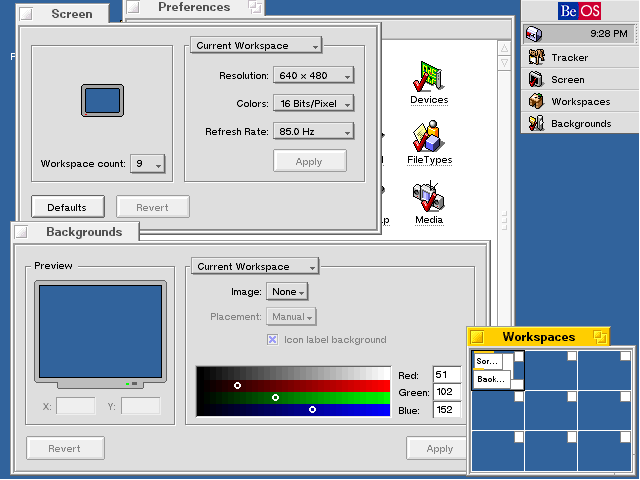
I think “light mode” should be “grey mode”, and definitely lament the lack of supported, maintained “grey modes” in both KDE and GNOME. There’s a reason that graphical user interfaces in the era of extensive science-based human-computer interaction research opted for soft, gentle greys (ooh, aah, mmm), and I’m convinced we need to bring it back. The glaring whites we use today are cold and clinical, and feel unpleasant to the point where I turn down the brightness of my monitor in a way that makes other colours feel too muted.
Or perhaps I’m out of touch.


Bog and God yes. I cannot stand in the slightest using dark mode, but “light modes” are becoming hard to use too as my eyes age. Probably reflecting off the beard.
Just give the people the grey! I don’t give Microsoft or Apple much credit, but pre-XP/pre-OSX greys were perfect. I don’t even care if they keep the crappy modern UIs if they gave us grey color themes.
It’s not so hard. Remember that most OSes allowed you to create custom color themes?
I am colourblind and used to rely heavily on that.
Just let us choose.
Microsoft should never have deprecated the 95 to 2000 style. Make it an option, but shouldn’t have got rid of it.
The crazy thing is, in Windows 11 today, it still exists. It’s not easy to find, but it’s there underneath all the Metro styling, and underneath the Win7 Aero Basic styling under that.
I think Cosmic Desktop light mode got it nailed. It’s soft gray, although too ugly to my taste. Also, Plasma allows lots of configuration in many departments, including window color.
It’s incredibly frustrating. I use dark mode for everything and already couldn’t stand light mode before they started making it bright white.
Now, any app or website which refuses to offer a dark mode is a temporary blinding as I scramble to find the close button.
darkgreen,
It makes me wonder how people would feel about a browser based AI feature that automatically rethemed websites according to the user’s preferences. Such AI themes could actually make all websites thematically consistently across the browsing session regardless of the website.
I am strongly against AI that outsources control to someone else (which is what big tech wants of course). But I think there are so many applications like this where tapping AI can improve the user experience. I am not interested in it unless it is executed in a way that genuinely respects user control and privacy, which alas is antithetical for big tech. The corporate agenda is to deliver AI in a way that stomps out on consumer independence & privacy interests. Hypothetically though if a browser like FF offered these types of local AI features to give users new ways to customize websites, I wonder if Thom would come out as a critic or a supporter. Personally I am in favor of this type of innovation.
You don’t need AI for that. It already exists and is called Dark Reader. It works on every major desktop browser, and on Firefox Mobile.
runciblebatleth,
https://darkreader.org/
Interesting project. It does look like it could be useful for OP. I do wonder how well it works across very different websites. I haven’t tried it, but I’d expect a naive CSS conversion tool might require some site by site customization to get right. This is the scope where I envision AI being potentially useful in extending themes to websites that don’t match the programming dataset. Anyway thanks for mentioning it.
PS. I was about to post this and I noticed that some of the links appear to be hijacked or wrong. The link for “Dark Reader Mobile” and “Google Play” go to a microsoft download page for “Microsoft Edge: AI browser”. Weird.
I really don’t like all of this discussion around light and dark modes. There are millions of colors that aren’t shades of gray! One of the things I love about KDE is that I can choose a color scheme that fits my wallpaper without being dependent on a single color. This week, I’m using a color scheme that colors most widgets tan. Next week it could be maroon, etc. In the days of Windows XP and prior, I spent weeks creating color schemes for various Plus! themes, I just need to port them to KDE…
Windows 2000 was peak interface clarity.
I find that it’s just a general decay of the quality of UIs.
The window backdrops which should be grey get lighter. The text frames that were stark black on pure white in Win9x/ME/NT/2000 and classic Mac OS become low-contrast grey-on-grey. Thank goodness for KDE and Stylus userstyles and the like. Nothing else saves me from the apparent spread of graphic designers with no UI/UX training masquerading as UI designers.
(I never understood the appeal of the Light version of Solarized)
I maintain a whole blog post named Fixing Applications Which Resist Feeling Platform-Native to keep track of what I learn about fixing these sorts of things and, more generally, stuff like GTK4-isms introduced into Inkscape in the name of removing use of deprecated classes.
Dark mode should be called black mode.